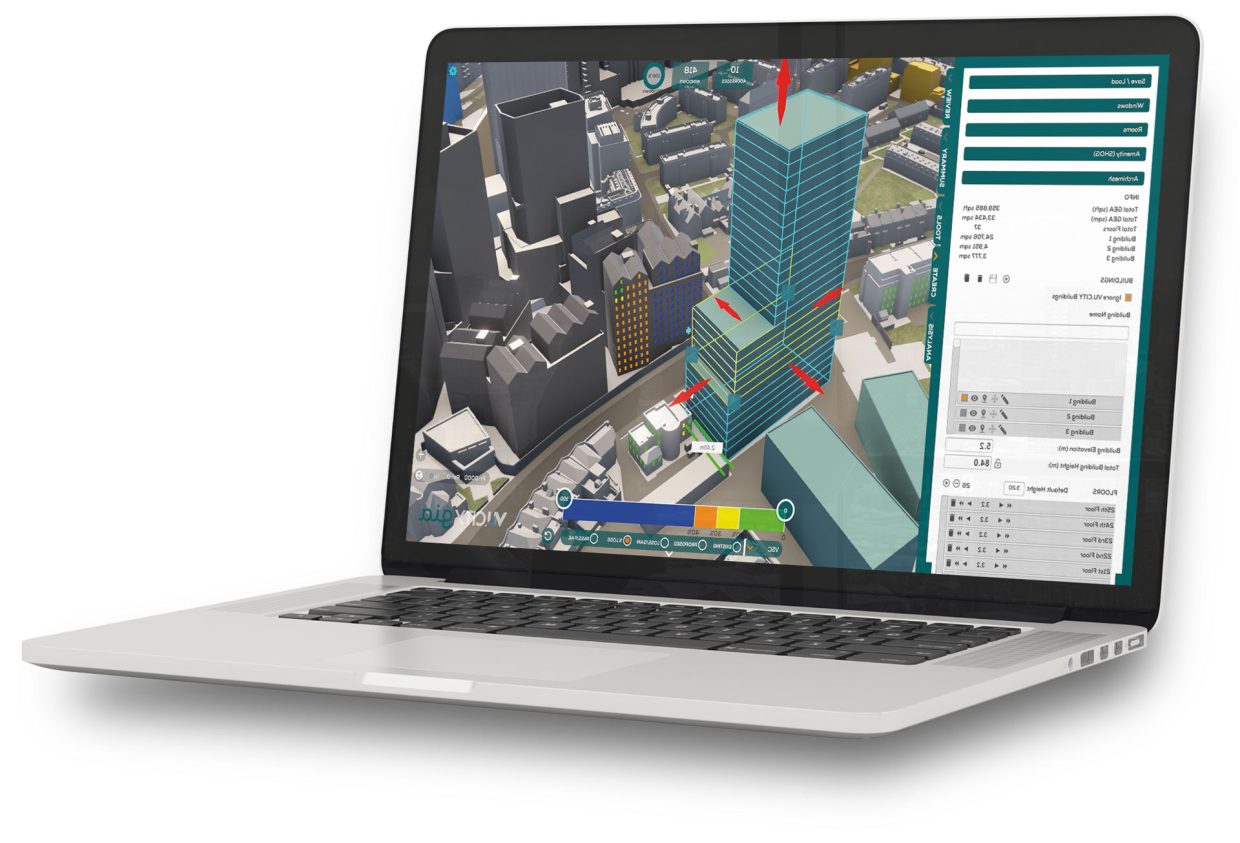

Masterplanning considers the orientation and articulation of a scheme and has two implications for us. Firstly, it provides an early understanding of the potential, and possibly detrimental, impact of a scheme upon neighbouring properties and the quality of their daylight and sunlight, and any overshadowing effects. Secondly, it gives an early understanding of the potential for the scheme to be adequately and naturally lit internally, and whether an exterior element will face design challenges which require more detailed study. We consider the sunlight issues at an early stage to harness sunlight for architectural purposes and thermal gain, balanced against the need to mitigate solar glare and discomfort for those using the space.
Shading studies are often required by the local planning authority where there are residential properties or open amenity spaces such as parks, gardens and children's play areas near a proposed scheme. Overshadowing analysis of these spaces can be calculated using accurate 3D models and incorporates both transient shadowpath and areas that will be subjected to permanent shadow.
We utilise a range of specialist design tools to help the architect and developer to visually understand the quality of natural light within their scheme. We believe that sound design philosophy ensures compliance but that guidelines to satisfy planning requirements alone do not form design principles. We therefore support the design of environmentally responsive buildings that far exceed minimum standards. Instead we strive to bring the building to life, creating visually stunning, naturally daylit spaces that encourage a feeling of well-being in all those who use them.
An atrium is a very effective and visually beautiful means of admitting or channelling daylight into a building. We work closely with architects throughout the design process, advising on how deeply natural daylight will penetrate and the most effective methods to achieve the best results, as well as strategies to mitigate solar gain and overheating. We also advise on a raft of other devices to distribute daylight or sunlight more evenly within buildings.
Light pollution analysis can be undertaken to predict the amount of artificial light which will spill from a proposed scheme into the immediate vicinity. We advise on how best to mitigate this, a concern to planning authorities and an increasingly more prominent component of Environmental Impact Assessments.
Solar glare is where the reflected image of the sun from shiny façades of buildings with expansive glass fronts or windows may be a danger. Orienting a building to optimise thermal gain from sunlight will result in a number of benefits including significant heat savings but this requires a strategy and design solution to manage solar glare. We have extensive experience in this field and can analyse a proposed scheme to determine the precise impact to sensitive areas, such as road junctions, pedestrian walkways and railway signals.
Detailed daylight linking studies use a number of different methodologies and techniques to translate technical information into a more graphical, user-friendly format. They show the distribution and quality of light within a space, and the point at which artificial lighting should be introduced. We advise on the most effective means of bringing harmony between natural and artificial lighting to achieve the best results.
An increasingly sensitive environmental and political agenda has impacted heavily on development. Natural light is a subtle yet powerful medium. Where a building works with it, the positive effects are tangible but when in conflict this is felt by all. We work closely with leading architects and developers to establish how natural light within a building scheme can be used most effectively and imaginatively to optimise its amenity, value and overall quality.
How can this service benefit you?
Contact us for more information
Download brochure
We work closely with these areas of expertise:
Rights of Light
Daylight & Sunlight
Lighting Design
Analysis & Visualisation